

In pathology laboratories, biomedical scientists and clinical technicians spend long hours handling samples, operating microscopes, and performing repetitive tests at static workstations. These tasks often involve prolonged sitting or standing with limited opportunities to change posture. Without proper ergonomic support, staff are at increased risk of repetitive strain injuries (RSIs) — a type of musculoskeletal disorder (MSD) caused by repetitive movements, sustained awkward postures, or overuse. This can lead to discomfort, fatigue, and reduced focus, ultimately impacting both staff wellbeing and laboratory productivity.
Lab Work and the Risk of Musculoskeletal Disorders
Musculoskeletal disorders — such as back pain, neck strain or repetitive strain injuries (RSIs) — are not confined to office environments. Lab work often involves:
- Static postures at fixed bench heights,
- Repetitive hand movements (e.g., microtomy, pipetting, sample preparation, prolonged microscope use),
- Extended focus without breaks.
These factors increase the likelihood of chronic pain and fatigue, which directly contribute to lost productivity and increased absence.
The Cost of Poor Desk Ergonomics
In Great Britain in 2024/25, work‑related musculoskeletal disorders (MSDs) caused an estimated 7.1 million lost working days, with each affected worker taking an average of 14 days off (HSE).
Pathology lab staff — including biomedical scientists and clinical technicians — perform repetitive tasks at static workstations for long periods. This puts them at higher risk of repetitive strain injuries (RSIs), a type of MSD, which can lead to discomfort, fatigue, and reduced focus — all of which impact staff wellbeing and lab productivity.

Ergotec: A Practical Ergonomic Solution
The Ergotec Height Adjustable Worktable is a purpose-built ergonomic laboratory workstation designed to promote staff comfort, encourage natural movement, and support sustained performance throughout long, demanding workdays. By allowing seamless transitions between sitting and standing, accommodating a variety of laboratory tasks, and integrating features tailored to scientific workflows, it helps reduce fatigue, minimise strain, and improve overall efficiency and wellbeing for laboratory professionals.
Key features:
-
Electric height adjustability for seamless sitting-to-standing transitions, reducing static postures.
-
Programmable heights for multiple users.
-
Customizable options: LED lighting, cable management, drawers, equipment mounts, and task-specific attachments.
-
Supports neutral posture, improves circulation, and reduces strain from repetitive motions.
Laboratory-specific design:
-
Integrated equipment mounts for microscopes, centrifuges, and other instruments.
-
Anti-vibration technology for precision tasks like microtomy and microscopy.
-
Durable, lab-ready surfaces resistant to chemicals, frequent cleaning, and heavy use.
- High load capacity to support heavy lab equipment.
By combining ergonomic adjustability with lab-specific features, the Ergotec Worktable enhances staff safety, comfort, and productivity in ways traditional sit-stand desks cannot.
More Infomation See How Ergotec is already help UK Labs
Ergonomics Backed by Research: What the Evidence Shows
UK Service, Support & Long-Term Reliability
Ergotec worktables supplied by Solmedia are supported by a structured UK service and support framework designed to ensure long-term reliability. A 10-year parts guarantee is provided as standard, supporting consistent performance over the full working life of the equipment. In addition, a dedicated UK-based service department is available to manage maintenance requirements and respond efficiently should technical issues arise. This approach helps ensure laboratory workstations remain operational, properly maintained, and supported, reducing disruption and supporting continuity in day-to-day laboratory workflows.
More Ergonomic Solutions for Pathology Laboratories
Ergonomically designed products play a vital role in supporting laboratory staff by reducing physical strain, improving posture, and enhancing comfort during repetitive tasks. Below are a few examples of the ergonomically designed products we supply, specifically developed to support laboratory professionals and improve overall workflow efficiency.
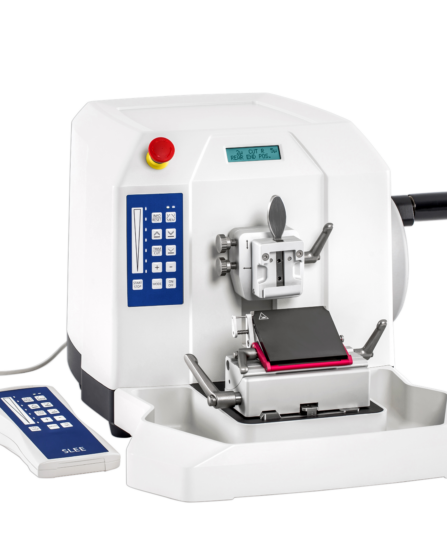
Histology Equipment
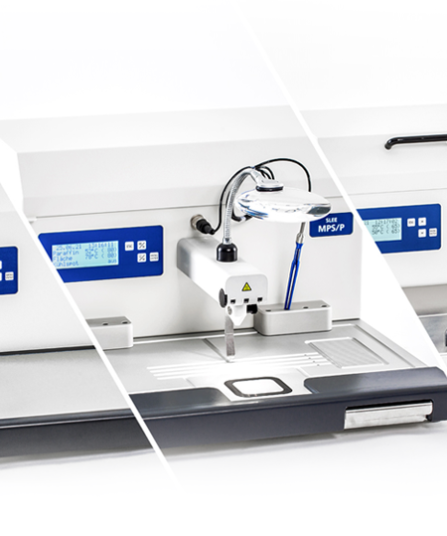
Embedding Centre

Workstations

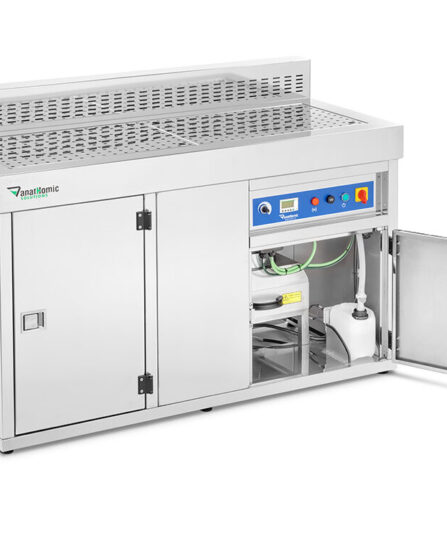
Specimen Reception & Dissection Equipment
key Resources
References
- Health and Safety Executive data: estimated working days lost in Great Britain (2024/25) due to MSDs ~7.1 million days. (hse.gov.uk)
- Musculoskeletal disorders account for a significant share of work-related illness and lost days. (spatialcortex.co.uk)
- HSE stats: 543,000 workers living with MSDs and 7.8 million lost days (2023/24). (ergonix.co.uk)
- Average UK biomedical scientist salary used for cost estimation (~£32,424/year) and hourly pay ~£17/hr. (payscale.com)
- Research indicates adjustable workstations can reduce neck and back discomfort up to ~54%. (posturite.co.uk)
Ergonomics Workplace Statistics (UK) References
- Work-related MSD cases in Great Britain (2024/25): ~511,000 workers reported MSDs. Source: HSE UK statistics – https://www.spatialcortex.co.uk/post/work-related-musculoskeletal-disorders-in-great-britain-hse-uk-msd-statistics-2025-executive-sum
- Working days lost due to MSDs (2024/25): ~7.1 million days. Source: HSE UK – https://www.hse.gov.uk/statistics/dayslost.htm
- Prevalence of MSDs as a cause of work-related ill health: MSDs accounted for ~20–27% of work-related ill health cases. Source: HSE UK – https://www.spatialcortex.co.uk/post/work-related-musculoskeletal-disorders-in-great-britain-hse-uk-msd-statistics-2025-executive-sum
- Average absence per MSD case: ~14 days lost per MSD case. Source: HSE UK – https://www.spatialcortex.co.uk/post/work-related-musculoskeletal-disorders-in-great-britain-hse-uk-msd-statistics-2025-executive-sum
- Percentage of studies showing sit-stand desks reduce discomfort outcomes: ~43% of studies reported reduced discomfort. Source: Sci. review of sit-stand desks – https://www.sciencedirect.com/science/article/abs/pii/S0003687019300304
- Sitting time reduction from sit-stand desks (workday): ~94 minutes less sitting per workday. Source: Trial evidence – https://pmc.ncbi.nlm.nih.gov/articles/PMC6603239/
- RSI improvement after ergonomic interventions: Among radiologists, 36% symptom resolution and 52% improvement (~88% improved). Source: Peer-reviewed study – https://pubmed.ncbi.nlm.nih.gov/34953728/
- MSK pain’s impact on productivity (UK survey): ~17% say MSK pain negatively impacts productivity. Source: UK employee health report – https://businesshealthinstitute.co.uk/wp-content/uploads/2023/01/workplace-health-report-2023-compressed.pdf