

Consistent, High-Quality Results
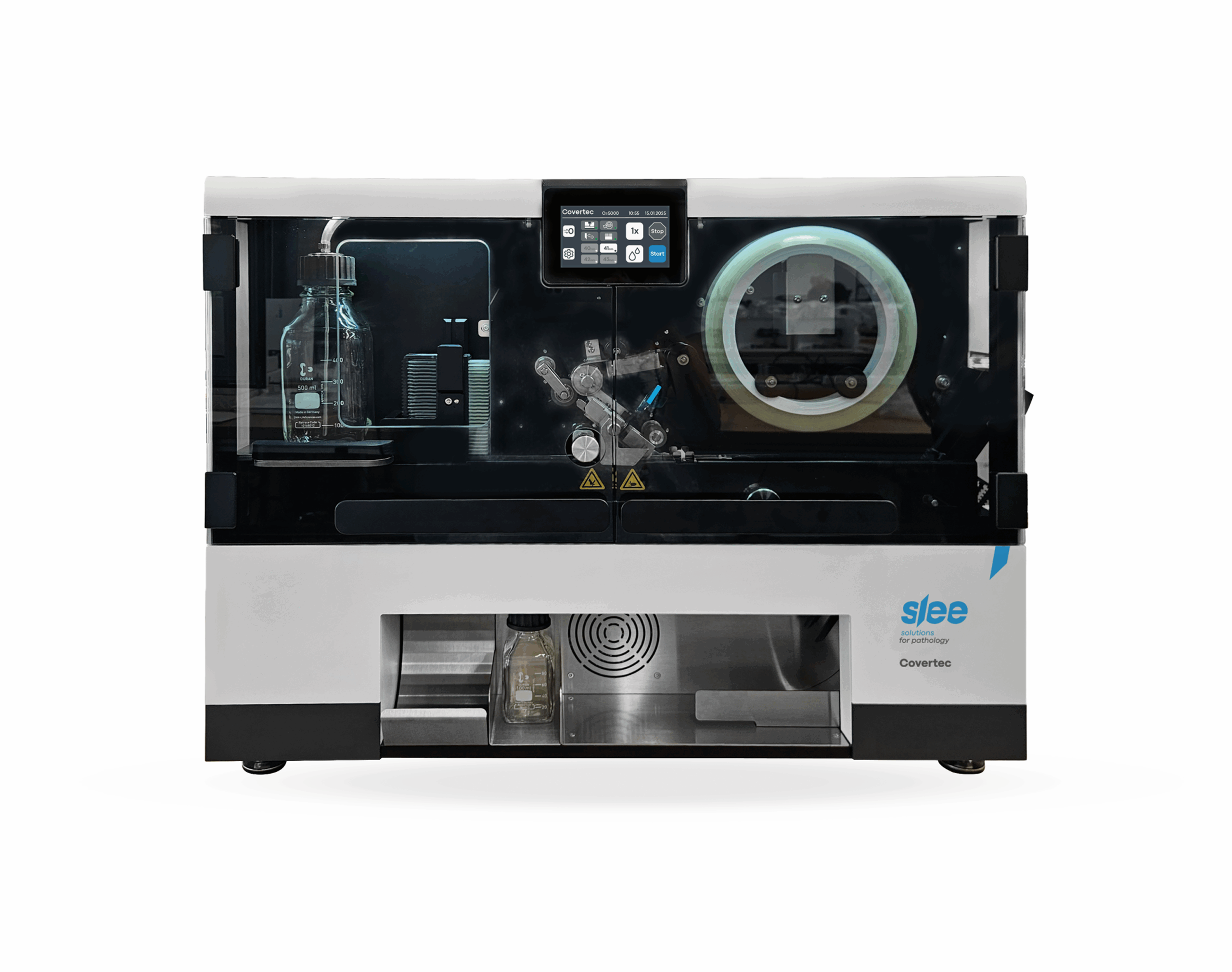
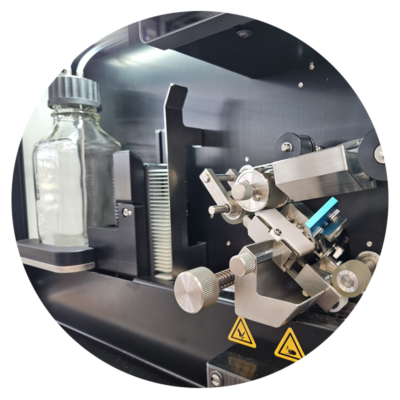
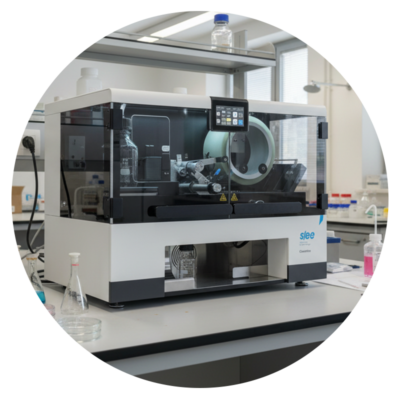
Precision and reliability are central to Covertec’s design. By automating the coverslipping process, the system ensures uniform coverslip placement and excellent optical clarity. This reduces variability and minimizes errors commonly associated with manual handling, resulting in dependable, reproducible slide quality.
Increased Laboratory Productivity
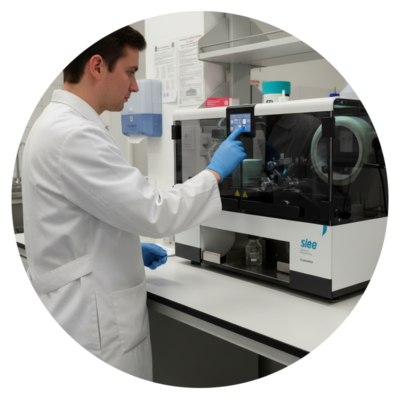
By automating a time-intensive manual step, Covertec allows laboratory staff to focus on higher-value tasks. The reduction in manual workload helps decrease operator fatigue while improving overall workflow efficiency, making it a valuable asset in busy lab environments.
High-Throughput Slide Processing with Covertec + Cromatec
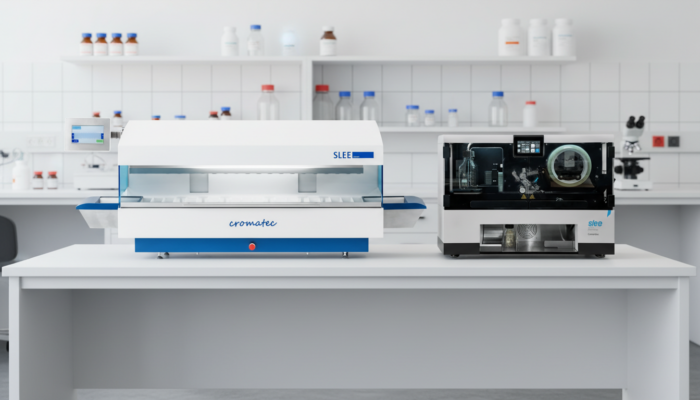
When the SLEE Covertec film coverslipper is paired with a SLEE Cromatec stainer, laboratories achieve a fast, streamlined workflow. Covertec processes slides in approximately 3 seconds each — up to 1,200 slides per hour — delivering consistent optical quality.
Cromatec complements this with high-capacity staining of up to 1,800 slides per hour (model dependent). Together, they create a continuous, high-volume histology solution that keeps staining and coverslipping moving efficiently from start to finish.
What Is Film Coverslipping?
Film coverslipping is a method used in modern pathology laboratories to seal stained slides using a thin, transparent polymer film instead of a traditional glass coverslip. The film is applied—usually by an automated machine—along with mounting media to protect the tissue section, preserve staining quality, and allow microscopic examination. It is commonly used in high-volume and digital pathology settings due to its efficiency and consistency.
Improved Workflow Efficiency
Tape coverslipping systems are typically automated, allowing for faster slide processing and more consistent application compared to manual glass coverslipping. This improves turnaround time and reduces hands-on labor, making it especially beneficial in high-volume pathology laboratories.
Reduced Breakage and Improved Safety
Because tape coverslipping does not use fragile glass coverslips, there is less risk of slide cracking during handling, transport, or storage. It also reduces the risk of sharps injuries to laboratory personnel, improving overall workplace safety.
Better Compatibility with Digital Pathology
The thin, even polymer film provides a smooth optical surface that can improve whole-slide imaging by reducing focusing issues and scanning artifacts. This makes tape coverslipping well suited for laboratories using digital pathology systems.
