
Why Ergonomic SLEE Microtomes Make Sense — For Staff Health and Lab Costs
How SLEE Microtomes Reduce Risk
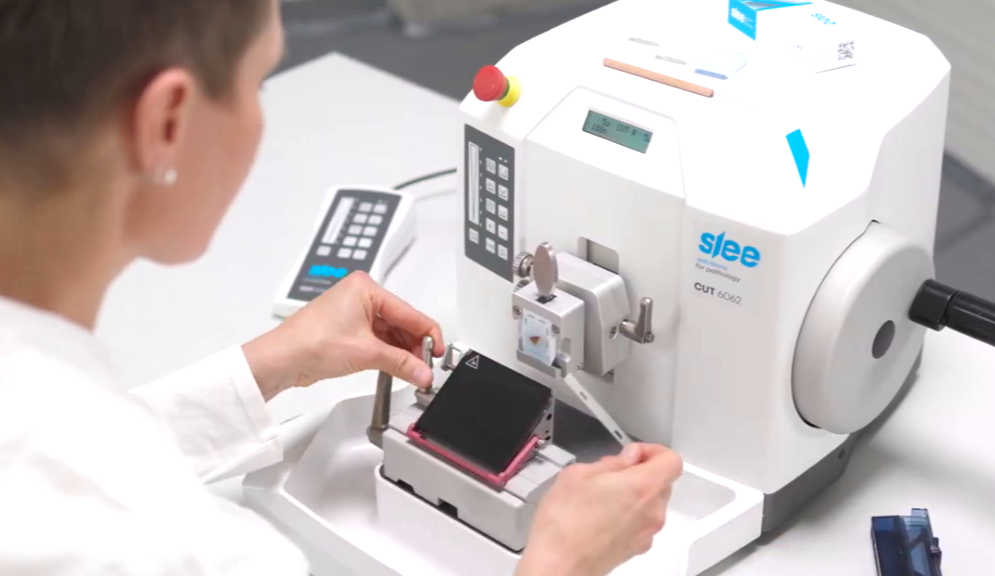
SLEE microtomes are designed with the operator in mind, and these ergonomic features are not limited to premium models but are included as standard.
Ergonomics Built In
- Controls and handwheels positioned for natural posture.
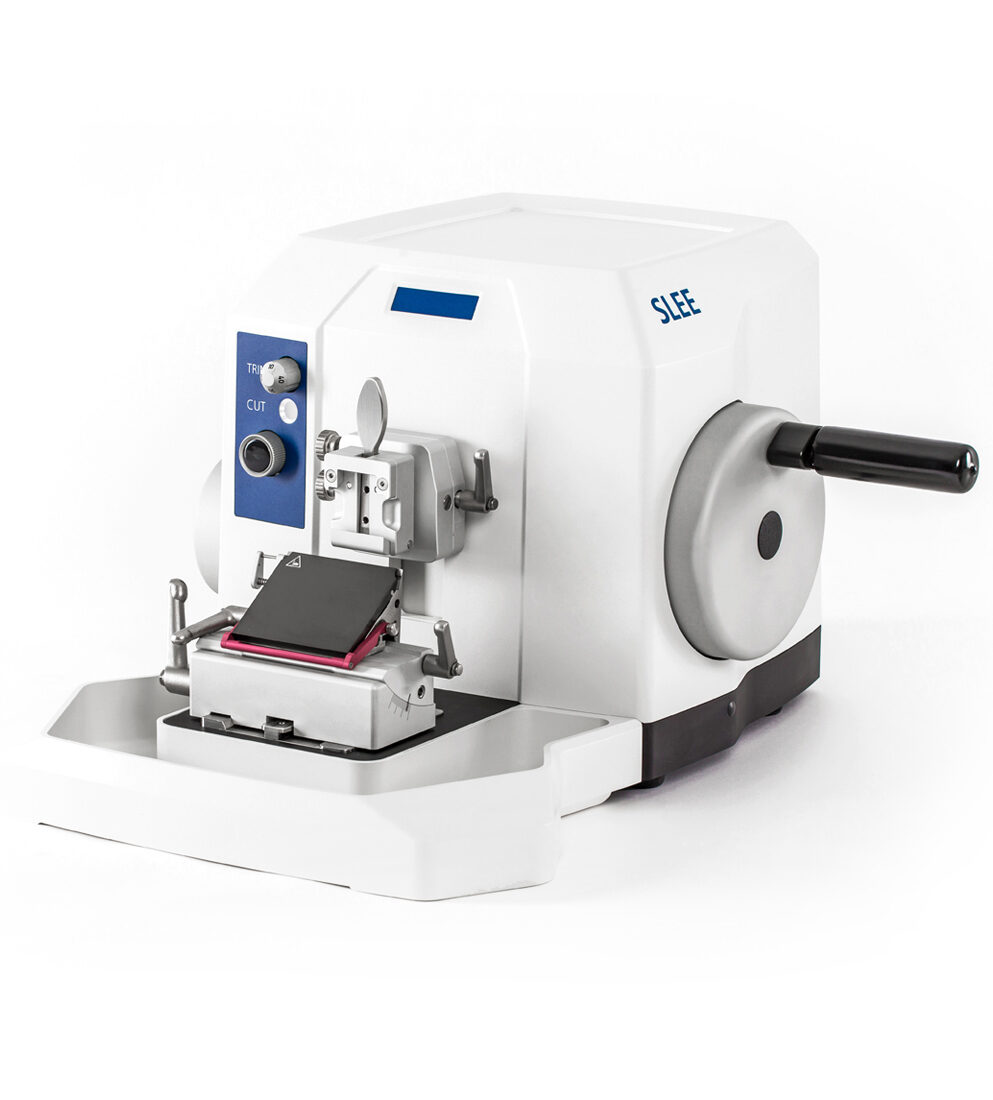
- Large integrated waste tray reduces bending and awkward movements.
Comfortable Operation
- Intuitive control panels on semi-automatic/automated models.
- Handwheel locks in any position, reducing strain during adjustments.
Reduces Repetitive Strain
- Left/right-hand adaptable blade holders.
- Optional coarse feed wheels distribute workload.
- Motorised trimming and specimen advance/return reduce repetitive handwheel use.
Better Workflow, Better Health, Better ROI
Ergonomically designed tools like SLEE microtomes can help prevent the development of RSIs and MSDs — which are costly in both human and financial terms. By investing in ergonomics:
- Labs can reduce lost productivity and absenteeism associated with injury.
- Employers may decrease liability and compensation costs tied to work-related musculoskeletal injuries.
- Experienced technical staff are more likely to remain healthy and productive long-term, reducing recruitment and retraining costs.
Competitor brands also include ergonomic components such as safety locks, adjustable feed wheels, and guards to improve comfort. However, SLEE’s key advantage is that ergonomics are integrated as a baseline feature across the range, not just as optional extras on higher-end units.