
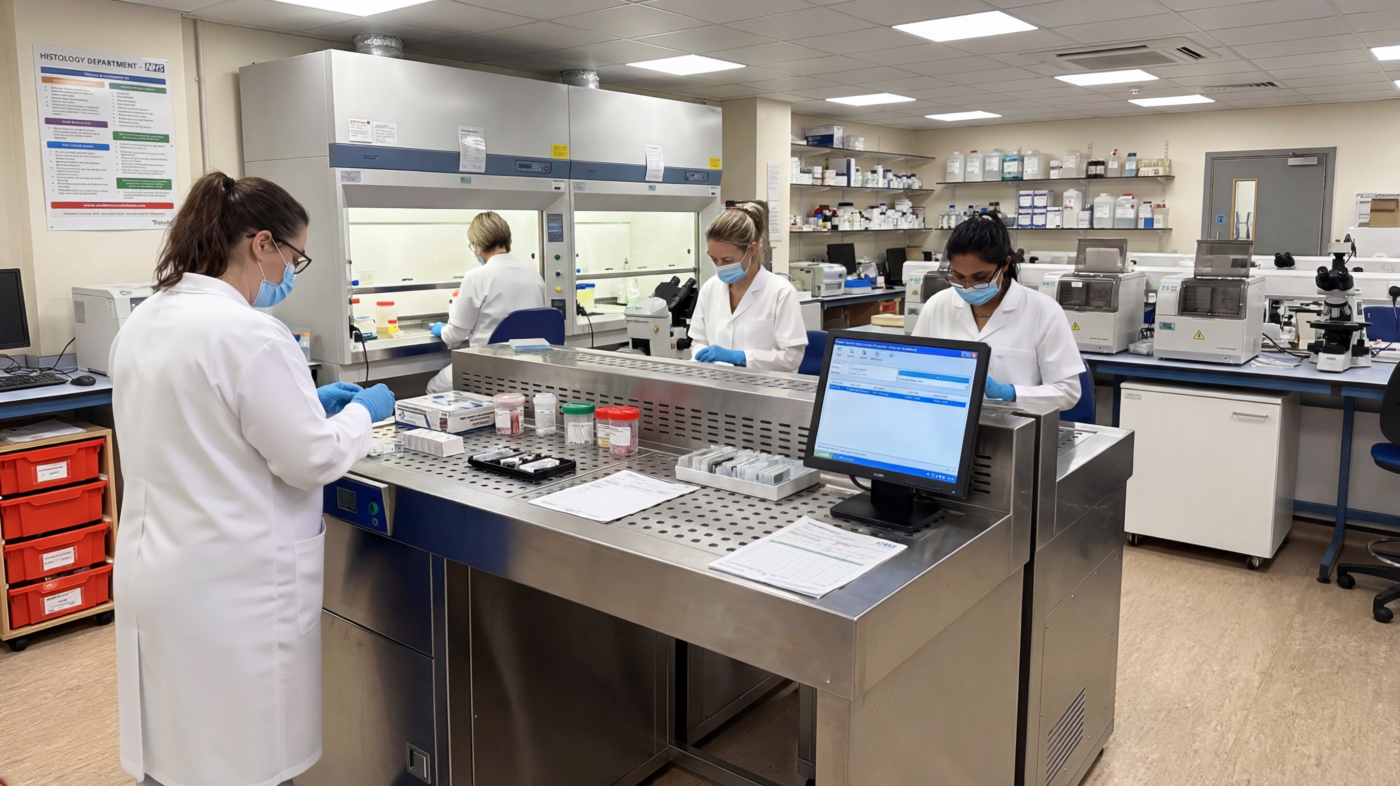
In modern pathology laboratories, the safe handling of clinical specimens is paramount. Many samples arrive preserved in formalin, a solution containing formaldehyde, which poses significant risks through both inhalation and direct contact. To protect laboratory staff and maintain regulatory compliance, effective exposure control at the point of specimen reception is essential.
An aspirated sample reception table is a specialised workstation designed to address these challenges. By combining local exhaust ventilation, spill containment, and organised workflow zones, it provides a comprehensive solution for the pre-analytical handling of samples. Unlike traditional downdraft units, aspirated tables not only reduce airborne vapours but also manage spills and support structured specimen processing, helping laboratories meet COSHH requirements while minimising the risk of cross-contamination and operator exposure.
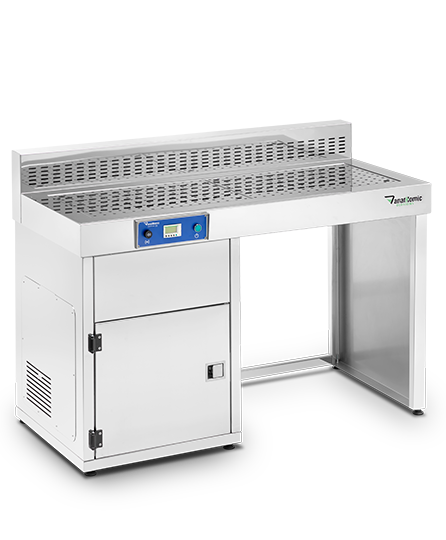
What an Aspirated Sample Reception Table Does
An aspirated sample reception table is a specialised workstation used for the initial handling of clinical specimens. Its key functions include:
- Local Air Movement Control: Integrated suction draws air and vapours away from the operator’s breathing zone.
- Fume and Particulate Management: Captures and removes chemical vapours released from specimen containers during handling.
- Spill Control: Built‑in drainage and containment features help manage accidental spills.
- Organised Workflow: Provides a designated area for logging, sorting, labelling, and pre‑analytical preparation of samples.
These tables are a form of local exhaust ventilation (LEV) — a recognised engineering control under UK health and safety standards.
Aspirated Sample Reception Tables Vs Downdraft Units
Both downdraft units and aspirated sample reception tables use local exhaust ventilation (LEV) to control formaldehyde vapours, but aspirated tables provide a more complete solution for pathology workflows.
Key Advantages of Aspirated Tables:
- Comprehensive exposure control: Capture both airborne vapours and secondary exposure from spills.
- Integrated workflow support: Dedicated space for sorting, logging, and labelling specimens.
- Spill containment: Built-in drainage reduces surface contamination and evaporative exposure.
- COSHH compliance: Addresses multiple exposure routes, aligning with UK regulatory requirements.
Comparison Table
| Feature | Downdraft Unit | Aspirated Sample Reception Table |
|---|---|---|
| Airborne vapour control | ✔ Reduces inhalation risk | ✔ Reduces inhalation risk |
| Spill management | ✖ Minimal / none | ✔ Built-in drainage and containment |
| Specimen handling support | ✖ Not designed for workflow | ✔ Dedicated zones for logging, sorting, labelling |
| Cross-contamination control | ✖ Limited | ✔ Structured workspace reduces errors |
| COSHH compliance | ✔ Partially | ✔ Comprehensive; addresses multiple exposure routes |
| Evidence-based reduction in formaldehyde | Moderate | 31–89% reduction; can reach near-zero at operator zone |
Why Exposure Control Matters in Pathology Labs
Pathology labs routinely handle specimens preserved in formalin (aqueous formaldehyde), which presents two main hazards: airborne vapours (VOCs) and liquid spill risks. Effective control is essential for staff safety and regulatory compliance.
Benefits of Aspirated Sample Reception Tables
Aspirated tables address both airborne and spill risks while supporting lab workflow:
- Integrated downdraft ventilation: Reduces formaldehyde vapour at the operator’s breathing zone
- Spill containment and drainage: Minimises surface contamination and secondary exposure
- Structured workflow zones: Dedicated areas for logging, sorting, and labelling specimens reduce handling errors and cross-contamination
- Regulatory alignment: Supports COSHH compliance by controlling multiple exposure routes simultaneously
By combining ventilation, spill control, and functional workspace design, aspirated sample reception tables provide a comprehensive, evidence-backed solution for safe specimen handling in UK pathology labs.